
Tooth decay and periodontal disease are among the most common oral health conditions and are primarily diagnosed through visual and tactile examination. However, areas such as the spaces between teeth and deep periodontal pockets are difficult to examine, often making X-ray imaging necessary. AirDent is therefore developing new optical imaging technologies to examine these hard-to-reach areas without exposing patients to ionizing radiation.
A Closer Look Inside Teeth and Periodontal Pockets
For detecting tooth decay, AirDent is developing a miniaturized handheld probe based on optical coherence tomography (OCT). This imaging technique uses light to generate detailed three-dimensional images of internal tooth structures, making it possible to visualize early-stage decay and cavities located deeper within the tooth.
In parallel, the project is developing a flexible endoscope with a diameter of less than one millimeter for diagnosing periodontal disease. Even particularly slim medical endoscopes currently measure several millimeters in diameter. This miniaturization will allow the device to reach into narrow periodontal pockets and visualize tooth root surfaces directly. The imaging system combines ultrathin optical waveguides with AI-based methods for data analysis.
Wireless Imaging for Dental Practice
Both handheld probes will transmit imaging data wirelessly to a central processing unit. To achieve this, AirDent is developing a high-performance, energy-efficient wireless connection capable of transmitting large amounts of data with minimal latency. The acquired data will be processed and visualized in real time and integrated into dental patient management systems. The requirements of future clinical use are being considered from the outset. These include ergonomic, lightweight device housings, medical device regulatory requirements, and the integration of various technical components into practical handheld devices. The resulting prototypes will initially be tested using dental and skull models as well as animal tissue specimens, followed by preliminary pilot studies to assess their clinical potential. Looking ahead, the technologies developed in AirDent could also find applications beyond the diagnosis of tooth decay and periodontal disease, including dental prosthetics, oral surgery, and medical imaging in other clinical fields.
Project Coordination
- Jonas Golde | Westsächsische Hochschule Zwickau
- Jakob Dremel | TUD Dresden University of Technology
Project Partner
- Computer konkret AG
- fiberware GmbH
- H+E Produktentwicklung GmbH
- Laser Electronic Components GmbH
- sitec systems GmbH
- Wavesense Dresden GmbH
- TUD Dresden University of Technology
- Westsächsische Hochschule Zwickau
- National Instruments Dresden GmbH (associated partner)
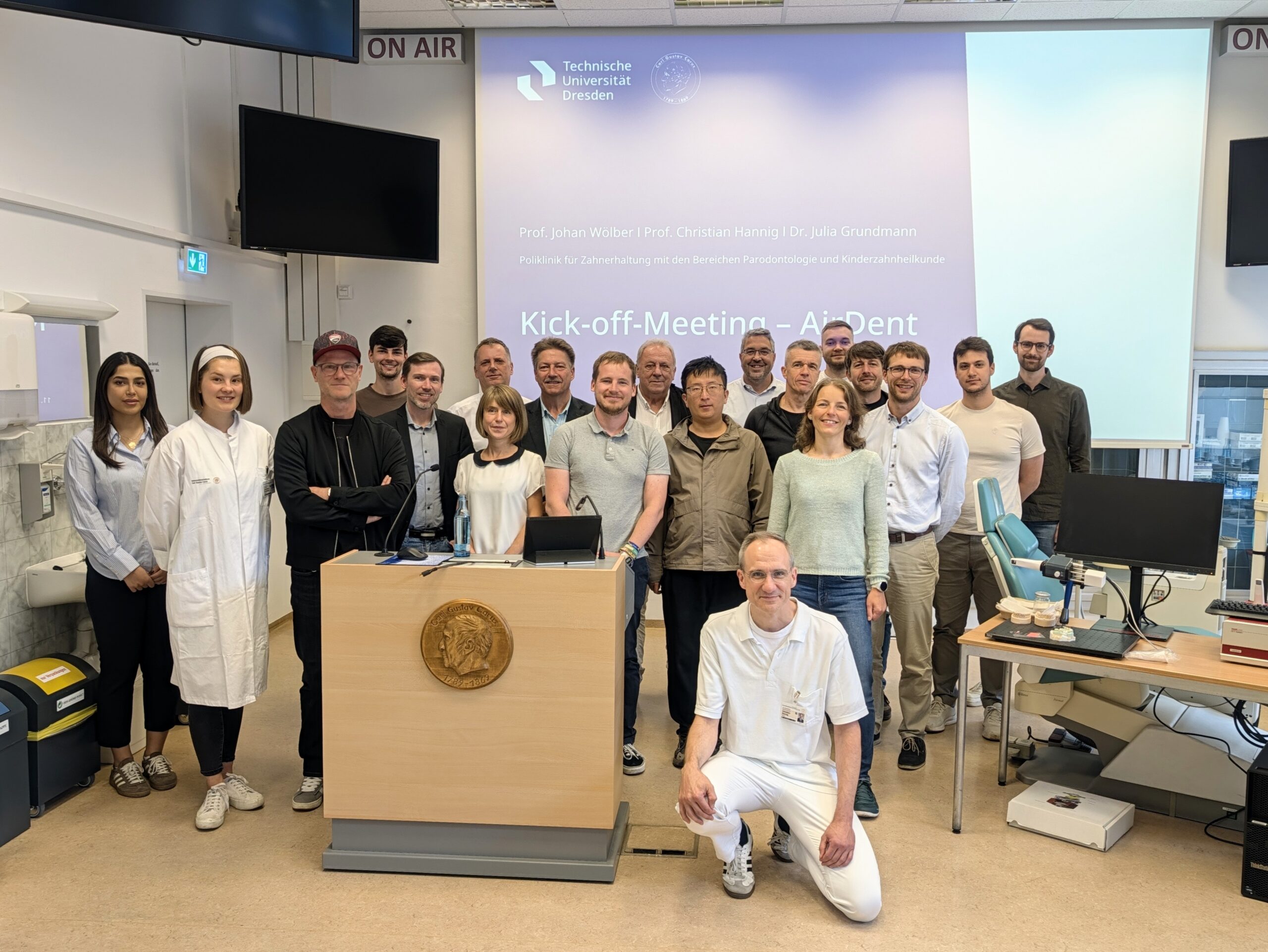
AirDent project partner at Kick-off-Meeting | (c) ZER/Grit Pech
